Keg Change Best Practices
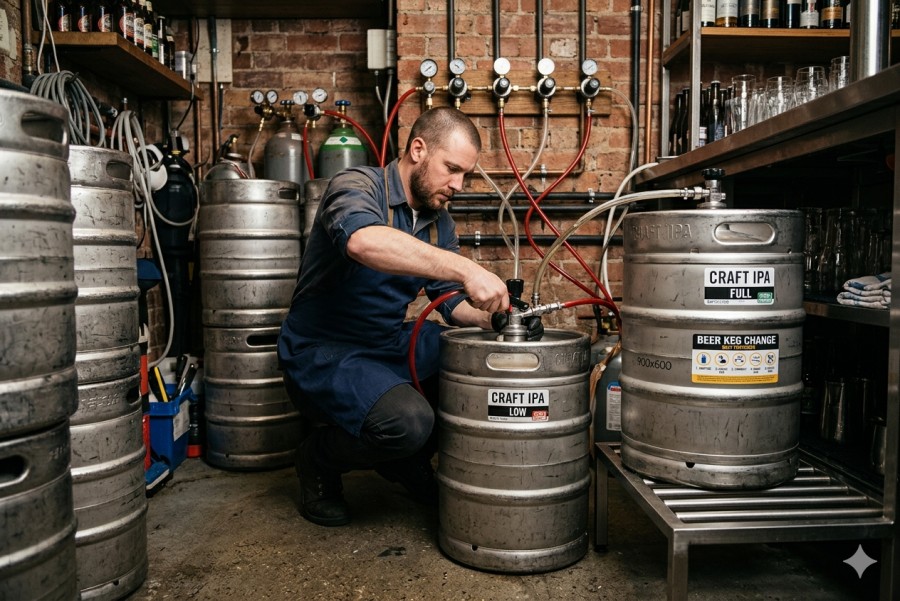
In commercial draught systems, proper keg change procedures play an important role in reducing beer waste, minimizing foam, and maintaining consistent beverage service.
Whether operating in a bar, restaurant, brewery, hotel, stadium, airport, casino, or other high-volume beverage environment, inefficient keg changes can lead to:
- Excessive foam
- Wasted beer
- Slower service
- Inconsistent pours
- Unnecessary cleanup
- Increased downtime
In long-draw beer systems, where beer may travel significant distances from the cooler to the tap, these issues can become even more noticeable.
Following proper keg change best practices can help improve draught system performance while reducing unnecessary product loss.
Why Keg Changes Matter
When a keg empties, air or gas can enter the beer line if proper Draught Foam Control systems are not in place. Once this happens, the line may partially empty or become filled with foam.
During the next keg connection, staff often need to:
- Purge foam from the line
- Discard beer until stable pouring returns
- Wait for pressure stabilization
- Re-pour foamy beer
- Clean up spraying or overflow
In busy commercial environments, even small amounts of beer waste during each keg change can become a significant operating cost over time.
Independent brewery testing has shown that Draught Foam Control systems can save approximately one pitcher of beer per keg in many long-draw installations.
Best Practices for Efficient Keg Changes
Replace Kegs Before Peak Service Times
Whenever possible, keg changes should be performed before busy periods to help reduce customer delays and service interruptions.
Verify Proper Cooler Temperatures
Warm beer lines or improperly cooled kegs can increase foam during keg replacement. Maintaining proper cooler and glycol system temperatures helps improve pour stability.
Check Pressure Settings
Proper regulator pressure and balanced draught systems help maintain stable pours during and after keg replacement.
Inspect Couplers and Connections
Loose or damaged couplers can create pressure instability and increase foam issues during keg changes.
Minimize Line Exposure to Air
Reducing the amount of air entering the beer line helps improve system stability and reduces foam after keg replacement.
Train Staff on Proper Procedures
Consistent keg replacement procedures can help reduce:
- Beer waste
- Excessive foam
- Service downtime
- Unnecessary cleanup
Proper staff training is especially important in high-volume commercial environments.
The Importance of Draught Foam Control
One of the most effective ways to reduce beer waste during keg changes is through the use of Draught Foam Control devices — commonly referred to as FOBs.
These systems are designed to automatically stop beverage flow when a keg empties, helping prevent air from entering the beer line and keeping the line full during keg replacement.
Benefits may include:
- Reduced beer waste
- Faster return to service
- Improved pour consistency
- Reduced foam after keg changes
- Less cleanup
- Improved operational efficiency
- Reduced downtime
In long-draw draught systems, keeping beer lines full during keg changes can significantly improve system stability and pouring performance.
Long-Draw Systems and Keg Change Challenges
Long-draw systems present additional keg change challenges because of the larger volume of beer inside extended trunk lines.
In systems with:
- 30 ft lines
- 100 ft lines
- 150 ft lines
beer loss during keg changes can become much more noticeable without effective foam control.
Typical beer loss estimates in long-draw systems may include:
| Beer Line Length | Approximate Beer Loss |
|---|---|
| 10 ft | ~6 oz |
| 30 ft | ~18 oz |
| 100 ft | ~50 oz |
| 150 ft | ~75 oz |
For operations changing multiple kegs every week, these losses can add up quickly throughout the year.
Pacific Beer Equipment Draught Foam Control Solutions
For more than 35 years, Pacific Beer Equipment has specialized in Draught Foam Control technology for commercial beverage dispensing systems.
Our product lineup includes the proven DFC 9500 and DFC 9600 models, along with the stainless-steel DFC 360 QF — designed for modern commercial draught systems requiring durability, reliability, and efficient beverage flow management.
Pacific Beer Equipment systems are commonly used in:
- Bars and restaurants
- Breweries
- Beer panels
- Hotels and resorts
- Stadiums and arenas
- Airports
- High-volume beverage environments
In addition to beer applications, Pacific Beer Equipment Draught Foam Control technology has also been used in:
- Nitro coffee systems
- Soda and soft drink dispensing
- Frozen beverage systems
- Margarita and daiquiri machines
- Liquor dispensing systems
Improving Draught System Efficiency
As beverage costs continue to rise, many operators are focusing more attention on reducing beer waste and improving draught system efficiency.
Proper keg change procedures, system balancing, preventative maintenance, and effective Draught Foam Control technology can all help improve operational performance while reducing unnecessary product loss.
In high-volume commercial environments, even small improvements in keg change efficiency can help deliver measurable long-term savings and more consistent beverage service.