Draught Foam Control
Draught Foam Control and Beer Waste During Keg Changes
Beer waste during keg changes is something many bars and restaurants deal with every day, even if they do not always notice how much product is actually being lost over time.
In busy commercial draught systems, especially long-draw setups, foam and unstable pours can become a regular issue whenever a keg runs empty. Whether in a restaurant, brewery, hotel, casino, stadium, or airport bar, those small losses during each keg replacement can slowly turn into a major operating expense.
The problem becomes even more noticeable in long-draw systems where beer travels a considerable distance from the cooler to the tap. In some installations, lines may run 30 feet, 100 feet, or well over 150 feet. The longer the line, the more opportunity there is for foam and beer loss when the keg empties.
Once a keg blows without a Draught Foam Control device installed, air can enter the beer line. As a result, the line may partially empty or fill with foam before the next keg is connected.
At that point, staff often have to spend time getting the system stable again. That can involve clearing foam from the lines, dumping beer until the pour looks normal, waiting for pressure to settle, and dealing with overflow or splashing around the tap area.
During a busy shift, this becomes more than just a small inconvenience. It slows service, creates unnecessary cleanup, and wastes product that could otherwise be sold.
The amount of beer wasted during a keg change can vary quite a bit depending on the system. Factors such as beer line length, pressure settings, serving temperature, and overall balancing all play a role.
Industry testing in long-draw draught systems has shown that operators can lose close to a pitcher of beer per keg in some situations.
Typical estimates often look something like this:
- 10 ft beer line – around 6 oz loss
- 30 ft beer line – around 18 oz loss
- 100 ft beer line – around 50 oz loss
- 150 ft beer line – around 75 oz loss
For locations changing several kegs every week, those losses can add up surprisingly fast over the course of a year.
Most operators think about wasted beer first, but the real cost usually goes beyond the product itself.
Excessive foam and unstable pours can also lead to:
- Wasted CO₂
- Additional labor
- Slower customer service
- Inconsistent beverage quality
- Extra cleanup time
- Reduced efficiency during peak hours
In high-volume venues, even small interruptions behind the bar can affect overall service speed and customer experience.
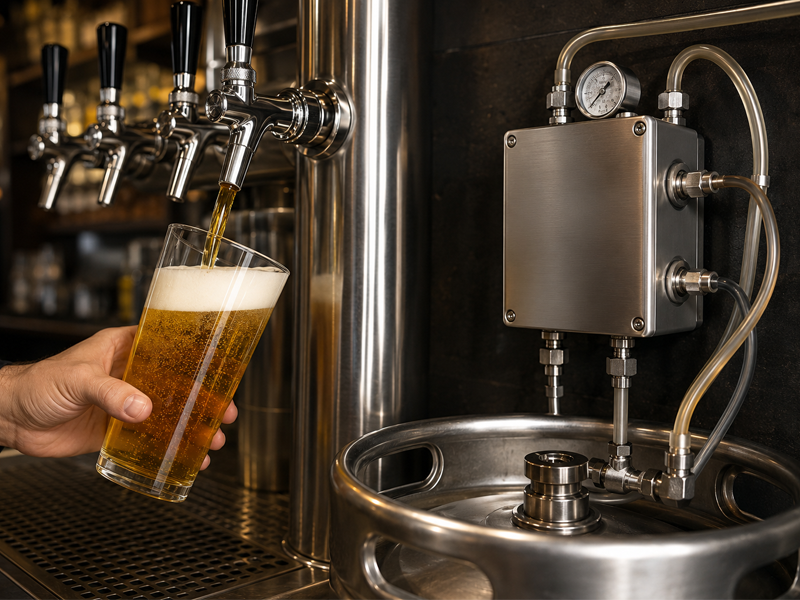
Draught Foam Control devices, commonly known as FOBs, are designed to stop the flow of beer automatically when a keg empties. This prevents air from entering the beer line and helps keep the system full while the keg is being replaced.
Because the line stays full, operators typically experience less foam, more consistent pours, and faster recovery after a keg change.
In many long-draw systems, FOBs can help:
- Reduce beer waste
- Minimize foamy pours
- Improve consistency
- Shorten downtime
- Reduce overflow and cleanup
- Improve overall draught efficiency
Pacific Beer Equipment has been working with Draught Foam Control technology for more than 35 years, supplying systems used across commercial beverage operations.
The company’s product lineup includes the DFC 9500, DFC 9600, and stainless-steel DFC 360 QF models, all designed to support reliable beverage flow and efficient keg change performance.
These systems are commonly used in:
- Bars and restaurants
- Breweries
- Stadiums and arenas
- Hotels and resorts
- Casinos
- Airports
- Large-scale beverage dispensing operations
In addition to beer systems, Draught Foam Control technology has also been applied in nitro coffee, soda dispensing, frozen beverages, and liquor systems.
As operating costs continue to rise, more businesses are looking closely at ways to improve draught system performance and reduce unnecessary waste.
Even relatively small improvements in foam management and keg change procedures can make a noticeable difference over time.
Reducing beer waste is not only about saving product. It is also about improving consistency, reducing downtime, and helping beverage operations run more efficiently during daily service.