Installation & Maintenance
Proper installation and routine maintenance play a critical role in the performance, efficiency, and reliability of commercial draught systems.
Whether installed in bars, restaurants, breweries, hotels, stadiums, airports, casinos, or other high-volume beverage environments, draught systems require proper balancing, cooling, and foam control to help maintain consistent pours and reduce unnecessary product loss.
As modern long-draw beer systems become more advanced, operators are placing greater focus on reducing downtime, improving operational efficiency, and minimizing beer waste through proper draught system management.
The Importance of Proper Draught System Installation
A properly installed draught system helps support:
- Stable pouring performance
- Reduced foam issues
- Improved temperature consistency
- Efficient keg changes
- Reduced beer waste
- Easier maintenance and servicing
- Improved long-term system reliability
Poor installation practices can contribute to:
- Excessive foam
- Inconsistent carbonation
- Unstable pours
- Beer loss during keg changes
- Pressure fluctuations
- Unnecessary service calls
In commercial long-draw systems, where beer may travel significant distances from the cooler to the tap, proper installation becomes even more important.
Key Components of Commercial Draught Systems
Commercial draught systems may include:
- Keg coolers
- Glycol cooling systems
- Insulated trunk lines
- Regulators and gas systems
- Beer towers and taps
- Beer panels
- Draught Foam Control devices
Each component must work together properly to maintain efficient beverage flow and consistent serving conditions.
Proper Beer Line Balancing
One of the most important parts of draught system installation is correct pressure balancing, as improper balancing can lead to:
- Foamy beer
- Flat beer
- Slow pours
- Inconsistent carbonation
- Excessive beer waste
Proper balancing helps maintain stable flow rates and improves overall draught system performance.
Temperature Management
Maintaining proper beer temperature throughout the system is essential for reducing foam and ensuring consistent pours.
Long-draw systems typically use glycol cooling systems to keep beer lines cold between the keg room and the dispensing point.
Warm beer lines can create:
- Excessive foaming
- Unstable pours
- Product waste
- Slower service recovery
Routine cooling system inspections and preventative maintenance are important for maintaining system efficiency.
Draught Foam Control During Keg Changes
One of the most common causes of beer waste occurs during keg replacement.
When a keg empties without a Draught Foam Control device installed, air or gas can enter the beer line. This often causes foam surges, spraying, inconsistent pours, and product loss before stable pouring resumes.
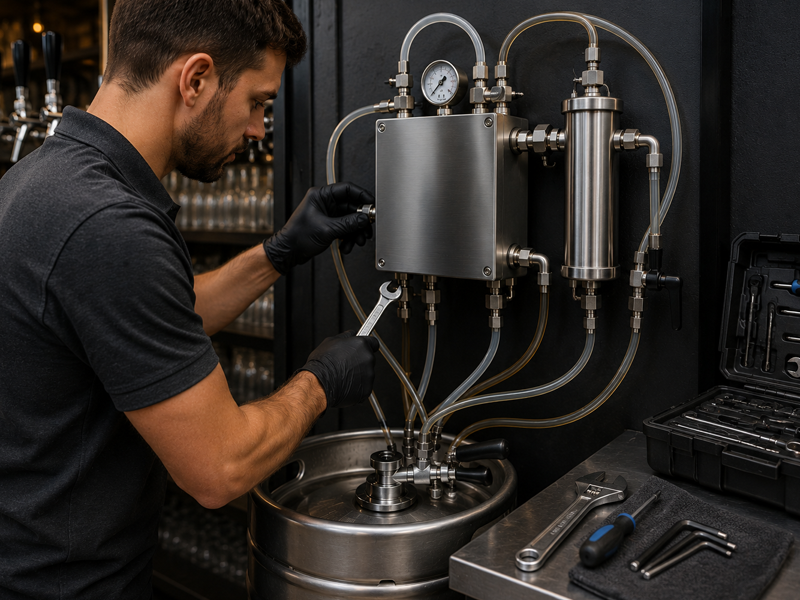
Draught Foam Control devices — commonly known as FOBs — are designed to automatically stop beverage flow when a keg empties, helping keep the beer line full during keg changes.
Benefits may include:
- Reduced beer waste
- Improved pour consistency
- Faster keg replacement
- Reduced downtime
- Less foam after keg changes
- Improved operational efficiency
Independent brewery testing has shown that Draught Foam Control systems can save approximately one pitcher of beer per keg in many long-draw installations.
Routine Draught System Maintenance
Preventative maintenance is essential for long-term draught system performance.
Routine maintenance may include:
- Beer line cleaning
- Regulator inspections
- Glycol system checks
- Pressure balancing adjustments
- Tap and faucet servicing
- FOB inspections
- Trunk line inspections
Proper maintenance helps reduce:
- Product waste
- Foam issues
- Equipment wear
- Service interruptions
- Inconsistent pours
Routine Maintenance
Neglected systems often create more foam and downtime.
Proper System Balancing
Maintaining correct pressure and stable temperatures helps improve pour consistency and reduce excessive foam.
Using Foam Control Devices
Many commercial draught systems use foam control devices, often called FOBs, to help reduce waste during keg replacement.
These devices automatically stop beer flow when a keg empties, helping keep air out of the line. As a result, operators often experience:
- Less foam after keg changes
- Faster recovery time
- More consistent pours
- Reduced beer loss
Pacific Beer Equipment
For decades, Pacific Beer Equipment has supplied draught foam control solutions for commercial beverage systems.
Their systems are commonly installed in:
- Bars
- Breweries
- Restaurants
- Hotels
- Stadiums
- Casinos
- Airports
The equipment is also used in several non-beer beverage applications, including nitro coffee and frozen beverage systems.
Final Thoughts
Beer waste is a common issue in commercial draught operations, especially in busy high-volume environments.
While some loss is unavoidable, many operators improve efficiency by focusing on better pouring practices, proper maintenance, stable system balancing, and foam control during keg changes.
Over time, even small reductions in wasted product can make a noticeable difference in operating costs and overall draught performance.